Leave Your Message

10 Best Car Seat Cameras for Baby Safety

Every parent knows the glance: a sleeping baby, a loose blanket, and traffic moving quickly ahead. A Car Seat Camera can make that rear-seat view clearer, but it cannot replace safe restraint, correct installation, or attentive driving.

The need is serious. NHTSA reported 756 children aged 12 and younger died in U.S. traffic crashes in 2022. Of those children, 308 were unrestrained. The American Academy of Pediatrics recommends that children younger than 13 ride in the back seat. Its guidance also supports rear-facing travel until the child reaches the seat’s height or weight limit. These recommendations matter more than attractive screens or advanced features.

Dr. Benjamin Hoffman, a pediatrician and child-passenger-safety authority, has emphasized a practical rule: “The best car seat is the one that fits your child, fits your vehicle, and is used correctly every time.” That principle should guide every camera choice. A useful model needs a stable view, clear night performance, secure mounting, and minimal driver distraction. It should also protect family privacy.

No camera is magic.

This guide examines ten leading options through a safety-focused lens. We compare image quality, alert functions, installation, battery behavior, viewing angles, and everyday reliability. Some products look impressive in bright showrooms but perform poorly beside a dark rear window. Others offer useful alerts but create too many notifications. I may be overly cautious, yet dependable simplicity often matters most when a baby is crying and the car is moving.
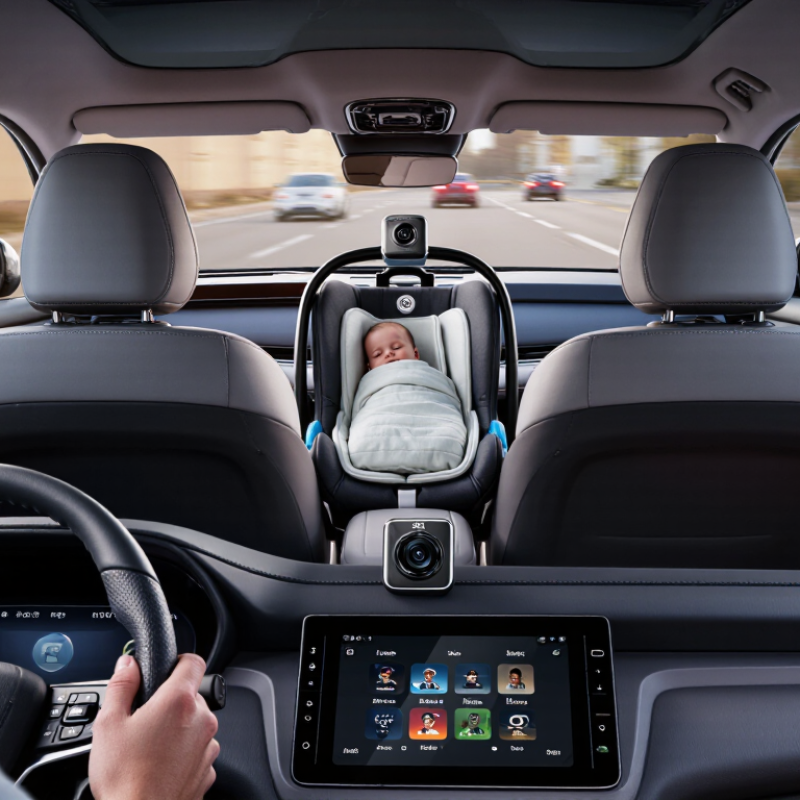
10 Best Car Seat Cameras for Baby Safety

What to Consider When Choosing a Car Seat Camera

Choosing a car seat camera requires more than picking the sharpest image. The camera should show your baby’s face and harness clearly, even at night. Test the view from the driver’s seat before driving. A wide angle helps, but excessive distortion can hide important details. Low-light performance matters during evening journeys.

Mounting is equally important. Choose a model that stays secure over bumps but does not interfere with the car seat, airbags, or seat-belt path. The device should have smooth edges and heat-resistant materials. Check its temperature limits, especially when the vehicle sits in direct sunlight. A loose cable can become a distraction or a hazard. Keep it away from the child’s reach.

Consider delay, battery life, and connection reliability. A small screen with fast video may be safer than a larger screen with frequent freezing. Some cameras rely on wireless signals, so test performance inside your own vehicle. Audio can help, but constant alerts may increase driver distraction. Privacy deserves attention too; use strong passwords and limit remote access when possible. Read the manual carefully, and verify independent safety testing where available. I once assumed a simple installation meant a secure installation. That assumption was wrong. A camera supports observation, but it never replaces stopping safely to check the child directly.
Types of Baby Car Seat Cameras and Their Key Features

10 Best Car Seat Cameras for Baby Safety

Types of Baby Car Seat Cameras and Their Key Features

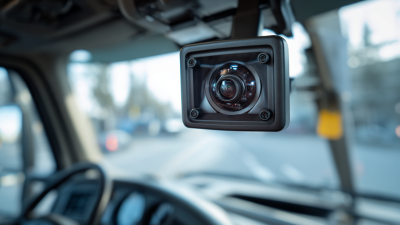
Baby car seat cameras generally fall into three types: mirror-mounted, dashboard-screen, and smartphone-connected systems. Mirror-mounted cameras show the rear-facing child through a small in-cabin display. They reduce the need to turn around, but the screen should remain outside the driver’s main sightline. Dashboard systems usually provide a wider image, night vision, and adjustable viewing angles. Smartphone-connected models may add temperature readings, motion alerts, or saved video. Convenience matters, but phone notifications can also become distracting.

Key features should match real travel conditions. Infrared night vision helps when the cabin is dark. A wide-angle lens can reveal a child’s face, straps, and blanket position. Temperature sensors are useful, yet they should not replace checking the cabin directly.

NHTSA reports that correctly used child restraints reduce fatal injury risk by 71% for infants and 54% for toddlers. The camera supports safe practice; it does not secure the child.

Installation deserves careful attention. A stable mount, short cables, and clear instructions reduce loose equipment near the seat. The American Academy of Pediatrics recommends keeping children rear-facing as long as possible within the seat’s limits. A camera cannot correct twisted harness straps or an incorrectly fitted seat. The weak point is often human attention. Not every alert deserves trust. Test the image in daylight, darkness, and bright sunlight before driving. I would also check privacy controls and disable unnecessary recording. Small oversights happen, and that is exactly why a simple, dependable design may outperform a feature-heavy system.

How the Ten Best Car Seat Cameras Compare

Comparing the ten best car seat cameras requires more than checking screen size. I would score image clarity, night vision, viewing angle, signal stability, and installation. A wide lens should show the child’s face, harness, and nearby seat area. Excessive distortion can hide important details. It happens.

The strongest models usually provide low-light video, temperature readings, and movement alerts. However, alerts differ greatly in accuracy. A false alarm may frustrate parents, while a missed alert creates dangerous confidence.

The National Highway Traffic Safety Administration recorded 29 child hot-car deaths in 2023.

Therefore, temperature monitoring matters, but it cannot replace physically checking the vehicle. A camera is an aid, not a caregiver.

Power options also separate these ten choices. Wired systems may offer steadier operation, while rechargeable units can be easier to move between vehicles. I would favor secure mounting, simple controls, and minimal screen delay over decorative features.

The American Academy of Pediatrics recommends rear-facing travel until a child reaches the seat’s maximum height or weight limit. A camera should not encourage earlier repositioning or replace correct harness use.

Privacy deserves attention too. Local storage may reduce unnecessary data exposure, although it can limit remote viewing. My comparison is not perfect; real performance can change with tinted windows, sunlight, and vehicle size.

Safety, Installation, and Privacy Considerations

10 Best Car Seat Cameras for Baby Safety

A good car seat camera should support safe driving, not replace attentive caregiving. The best choices provide a clear view without distracting the driver. I look for stable images, useful night vision, and alerts that are easy to understand. Too many notifications can create panic instead of protection.

Installation deserves careful attention. Secure the camera to a fixed interior point, away from the child’s face, neck, and harness straps. It should not interfere with tightening the restraint. Check the view from the driver’s seat before every trip. A loose mount may look acceptable at home, then shift after several road bumps. That detail is easy to miss.

Privacy also matters. Choose strong account protection, encrypted connections, and clear data-storage controls. Local recording can reduce unnecessary cloud exposure. Change the default password, install security updates, and avoid sharing access casually. Turn the camera off when it is not needed. A visible indicator light helps confirm its status. Still, no camera removes every blind spot, and technology can create false confidence. I would recheck the setup after cleaning, seasonal temperature changes, or moving the seat. The safest camera is the one installed correctly, used thoughtfully, and treated as a helpful supplement to direct supervision.

Tips for Using a Car Seat Camera Responsibly

10 Best Car Seat Cameras for Baby Safety

Tips for Using a Car Seat Camera Responsibly

A car seat camera can reduce worry, but it cannot replace direct supervision. Use it only as a support tool during necessary checks. Before every trip, confirm that the camera is firmly attached and cannot become a loose object during sudden braking. Keep wires away from the child’s neck, hands, and restraint straps. The car seat harness must fit correctly, with no bulky clothing underneath.

Set the display where it does not block your view of traffic. Never watch the screen while driving. Stop safely before adjusting the camera or checking a notification. A camera can fail. Batteries may run low, images can freeze, and darkness can hide important details. Test the picture, sound, and connection before longer journeys. Still, avoid relying on audio alerts alone. A quiet child may be sleeping, uncomfortable, or simply outside the microphone’s range.

Privacy deserves equal attention. Disable recording when it is unnecessary, protect stored footage, and use strong account security if the camera connects to the internet. Do not share images of your child casually. Check the device after hot or cold weather, since damaged mounts and weakened batteries can create risks. I have found that convenience can encourage overconfidence; a screen may make parents look less often at the child during stops. Make physical checks part of your routine, especially before leaving the vehicle. Never leave a baby alone in a parked car, even for a short errand.